This allowed the country to surpass the third Millennium Development Goal of gender equity in enrollments, a objective that many other international locations in Western Asia and sub-Saharan Africa proceed to battle with. The garment sector was just about non-existent in 1980 (Mostafa and Klepper 2009), however has grown a mean 17% per 12 months since inception, and now accounts for over seventy five% of Bangladesh’s export earnings (Bangladesh Export Processing Bureau 2009). The garment sector has dramatically modified the composition Bangladesh’s labour pressure, and was the first trade to supply massive-scale employment alternatives to women, in a rustic where women traditionally haven’t worked outside the home. Indeed, the trade currently employs almost 4 million staff (BGMEA 2013), eighty% of whom are feminine. In addition to elevating the opportunity value of being married and having children, enticing manufacturing jobs require basic literacy and numeracy (Amin et al. 1998; Zohir 2001; Paul-Majumder and Begum 2006).
Globally, cervical most cancers is the fourth most common most cancers amongst women, with an estimated 528,000 new circumstances in 2012 . A massive majority of the worldwide burden of cervical most cancers occurs in much less developed regions, the place virtually nine in ten (87%) deaths are as a result of cervical most cancers . In Bangladesh, cervical cancer is the second commonest cancer amongst women with an estimated eleven,956 incident instances and 6582 deaths in 2012 . The maternal mortality rate in Bangladesh is 240 deaths/a hundred,000 live births (as of 2010). Sexually transmitted infections are comparatively widespread, though the speed of HIV/AIDS is low.
Data are significantly necessary because the HPV vaccine has been lately introduced in 2016 for the primary time in Bangladesh by the Ministry of Health, with assist from the Global Alliance for Vaccines and Immunizations (GAVI) . A population-based mostly, cross-sectional survey was carried out from July to December 2011 in one city and one rural area of Bangladesh. A whole of 2037 ever-married women, aged 14 to 64 years, were interviewed using a structured questionnaire.
Similarly, according to our beforehand revealed findings, HPV-16 is the most typical excessive-danger HPV genotype detected in Bangladeshi women . This constant global discovery has resulted within the major development of primary prevention of cervical most cancers via HPV vaccination of young adolescents .
Additional research carried out in the U.S. have proven that caregivers of vaccinated children usually tend to be knowledgeable of the HPV vaccine than caregivers of non-vaccinated youngsters . However, research performed in growing countries, including Kenya and Nepal, have shown excessive HPV vaccine acceptability and willingness to receive the vaccine among women, despite low to average levels of information of cervical cancer and the HPV vaccine .
Knowledge of cervical most cancers and HPV vaccine in Bangladeshi women: a population based mostly, cross-sectional examine
This examine offers the first population-primarily based evaluation of willingness to obtain the HPV vaccine. These findings are timely as the Government of Bangladesh has lately obtained support from GAVI to offer a national HPV vaccine program to highschool-aged adolescent girls. The findings from this study provide the required country-particular evidence for the development of this program.
In contrast to our examine, the investigators reported that 8.3% of their study inhabitants had previously undergone cervical most cancers screening. This is especially interesting as the majority (73%) of their study pattern was from rural areas of Bangladesh. In our examine, solely 3.1% of urban and zero.7% of rural women reported to have ever undergone cervical most cancers screening. Findings from our analysis regarding screening charges are corresponding to other surveys carried out in creating international locations, notably the South-Asian subcontinent .
Languages
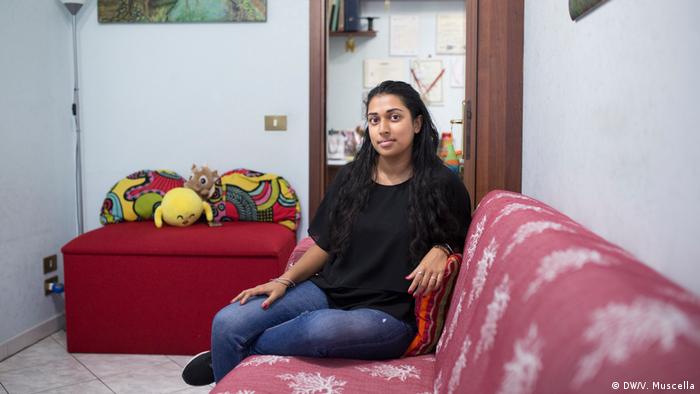
I’m interested in how we will improve selection for women, but as a Bangladeshi woman, I’m significantly involved in this venture. She says that issues are slowly changing, with Bangladeshi women working as caregivers, cultural mediators, waitresses and even bangladesh girls as hairdressers. “I would like to see Bangladeshi women smoking and hanging out at night time because that may tear stereotypes aside,” says Sahila Mahiuddin, 28. When Sahila speaks passionately, she waves her arms around in the commonest Italian way.
Despite high levels of consciousness of cervical most cancers, in-depth data of causes of cervical cancer and how it may be prevented is low. These findings underscore the need for culturally acceptable and targeted educational interventions to enhance knowledge of cervical most cancers causes and its primary prevention via the HPV vaccine. Despite low knowledge concerning the disease and its prevention, there was a excessive stage of willingness to receive a vaccine to forestall cervical most cancers. As such, this survey means that the HPV vaccine would doubtless be an accepted addition to routine vaccinations in Bangladesh. Findings from this examine have important implications for designing and implementing HPV vaccine packages, and educational efforts within the country.
Education on cervical most cancers must include information on signs, threat factors, and preventive methods. Despite poor information, the examine inhabitants was willing to receive the HPV vaccine.
In order to assess data of cervical most cancers, participants had been asked if that they had “ever heard of a most cancers referred to as cervical most cancers? Although findings from this research are novel and well timed for profitable HPV vaccine program implementation, a number of limitations ought to be taken into consideration when deciphering these outcomes. where they have incessantly participated in varied public health initiatives and analysis projects.
In India, levels of knowledge of cervical cancer and acceptance of the HPV vaccine range vastly by region . In southern India, earlier stories have shown that about one-third of girls have heard of HPV whereas only 15% have heard of cervical most cancers . Research performed in northern Indian among younger college-attending girls (12–22 years of age) depicts low awareness (15%) of HPV and cervical most cancers, and low acceptance (thirteen%) of the HPV vaccination . Although cervical most cancers is the second-main explanation for cancer deaths among women in India and the HPV vaccine is available within the Indian market, uptake is low because of low consciousness and information. Efforts ought to be made in Bangladesh to avoid a similar scenario and assets should be allotted to a large-spread and culturally sensitive instructional campaign to market the HPV vaccine as a vaccine against cancer for maximum uptake.
Data on socio-demographic traits and data of cervical cancer were collected. Multivariable logistic regression models have been developed to establish components related to having heard of cervical cancer and the HPV vaccine. The excessive stage of willingness to receive a vaccine to forestall cervical cancer regardless of low information of cervical cancer presents potential ethical points and underscores the necessity to provide academic programs. This will make sure that Bangladeshi women are in a position to make informed selections on their well being and that of their families.
Manufacturing Growth and the Lives of Bangladeshi Women
A 2014 study found that Bangladeshi women’ information about different diseases may be very poor. Bangladesh has recently expanded training applications of midwives to enhance reproductive well being and outcomes. We research the effects of explosive growth in the Bangladeshi ready-made garments business on the lives on Bangladeshi women.
Families on the Indian aspect made every effort to procure citizenship documents for the Bangladeshi girls/women who marry into their families. Some had taken to know-how and made video calls to connect with their natal families in Bangladesh.